Roof Pitch Calculator: Find Slope, Angle & Area Multiplier
Use this free roof pitch calculator to find your roof’s slope ratio, angle in degrees, and area multiplier from rise and run measurements – or convert directly from an angle. This multiplier is essential for accurately estimating shingles, materials, and project cost.
Vertical height the roof gains
Horizontal distance (standard = 12)
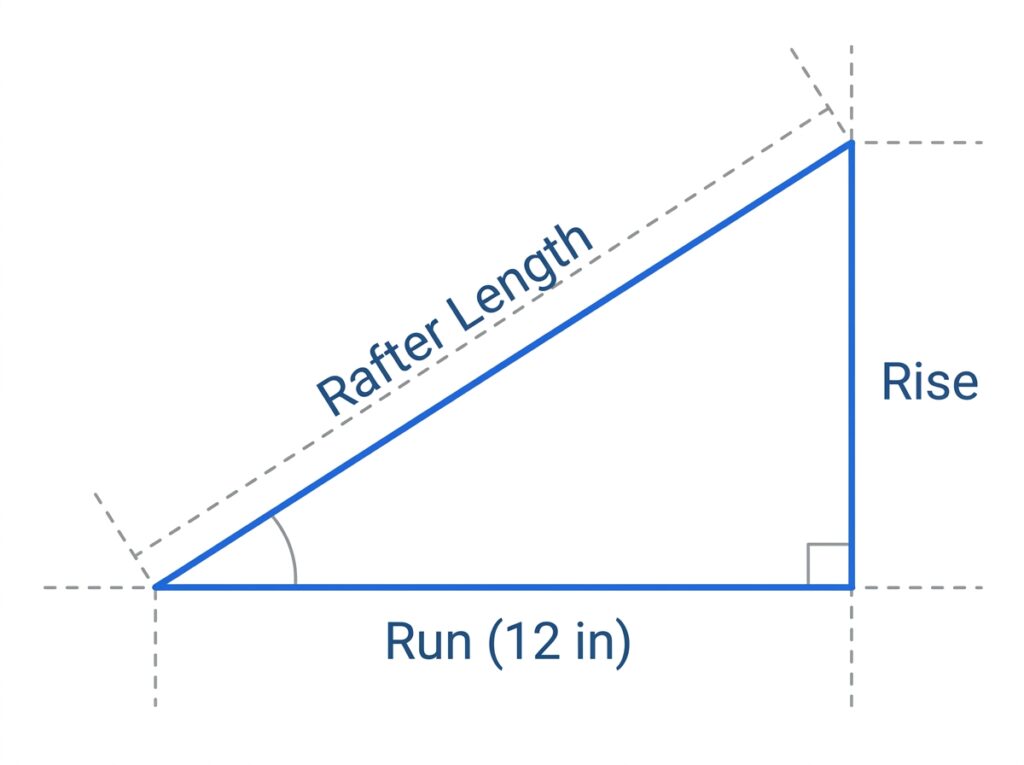
Used to estimate rafter length
How to Use This Calculator
Choose between two input modes. If you know your roof’s rise and run (the standard “X in 12” format used by roofers), select Rise & Run and enter the rise in inches – the run defaults to 12, which is the industry standard. If you only know the angle of your roof in degrees, switch to Angle mode and enter that value directly. Optionally, enter your building’s width to get an estimated rafter length per side. Click Calculate to see your pitch ratio, angle, slope percentage, and area multiplier.
How Roof Pitch Is Calculated
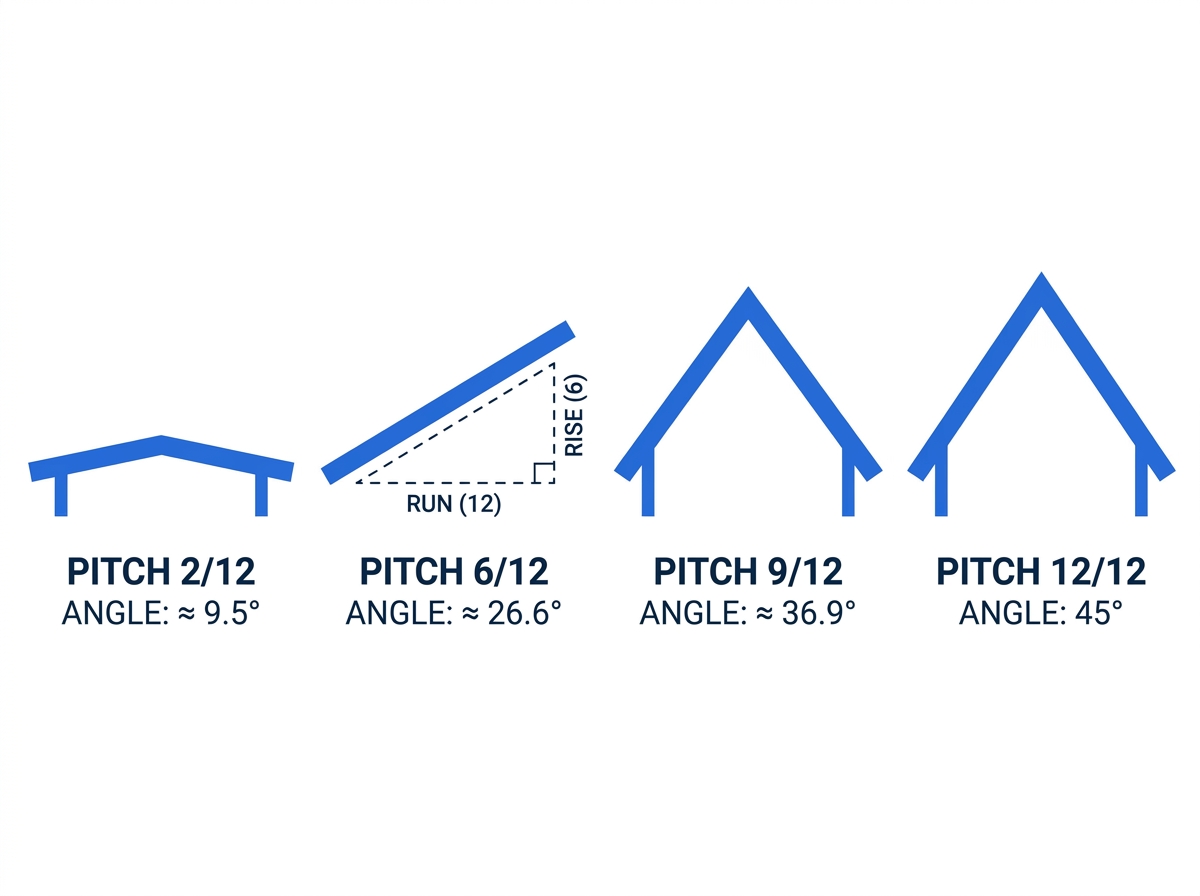
Roof pitch describes how steep a roof is, expressed as the vertical rise for every 12 inches of horizontal run. A roof with a 6/12 pitch rises 6 inches for every 12 inches it runs horizontally – this is roughly a 26.6-degree angle and is one of the most common residential pitches.
The calculator converts between three common formats: the pitch ratio (X/12), the angle in degrees (using the arctangent of rise divided by run), and the slope percentage (rise divided by run, as a percentage). It also calculates the area multiplier – the factor by which your roof’s actual surface area exceeds its flat footprint. This multiplier comes from the Pythagorean theorem: the rafter length (hypotenuse) divided by the run. A 6/12 pitch has a multiplier of about 1.118, meaning a roof is roughly 11.8% larger in actual surface area than its footprint suggests.
This multiplier is the same value used in our Shingle Calculator’s pitch dropdown, so once you know your pitch here, you can apply it directly when estimating shingles or total roofing cost.
What Is a Good Roof Pitch?
Most residential homes in the US have pitches between 4/12 and 9/12. A 4/12 pitch (about 18.4 degrees) is considered a low-slope roof, common in ranch-style and modern homes, and is the minimum recommended for asphalt shingles in most climates. A 6/12 pitch (26.6 degrees) is the most common “standard” pitch, offering a good balance of drainage, attic space, and material compatibility. Steeper pitches of 9/12 to 12/12 (36.9 to 45 degrees) are typical in colder regions for better snow shedding, and are often seen in traditional or steep-gable architectural styles. Roofs below 2/12 are generally considered flat or low-slope and require different roofing materials, such as membrane or built-up roofing, rather than standard shingles.