Synthetic vs Felt Roofing Underlayment: Which Should You Choose?
Synthetic underlayment is the better choice for most roofing projects today – it’s lighter, tears less, resists mold better, and holds up longer if exposed to weather during installation. Felt underlayment (traditional tar paper) is still code-compliant and cheaper upfront, which is why it’s still used on budget-conscious jobs. Use our Roofing Material Calculator to estimate how much underlayment your roof needs, or read on for a full comparison.
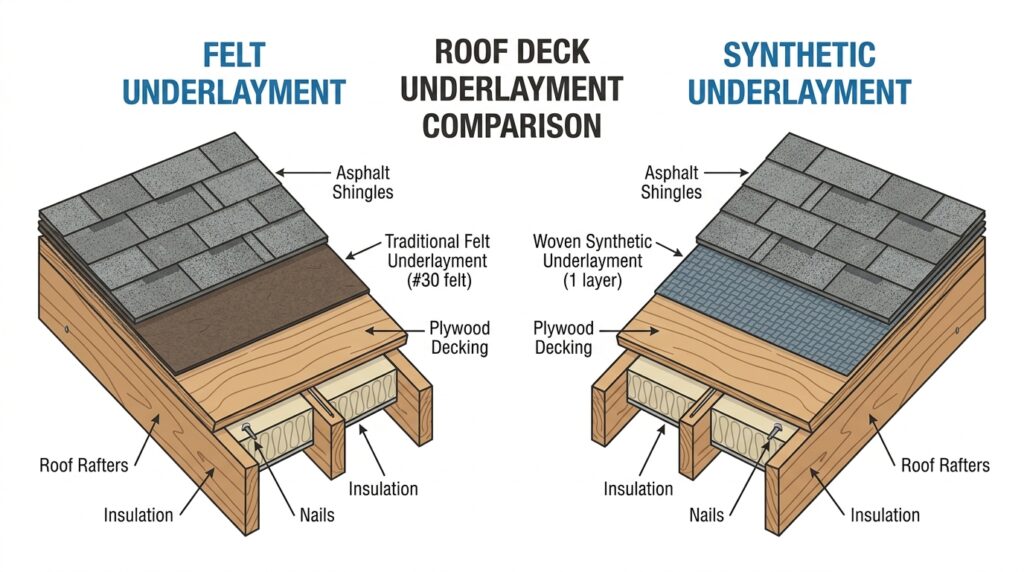
Synthetic vs Felt Underlayment: Side-by-Side Comparison
| Factor | Synthetic Underlayment | Felt Underlayment (15lb/30lb) |
| Weight | Lighter – easier to carry and install | Heavier, especially 30lb rolls |
| Tear resistance | High – resists foot traffic and wind | Lower – tears more easily, especially in cold |
| Exposure tolerance | 30-180 days depending on brand | Degrades faster if left exposed to sun/rain |
| Mold/moisture resistance | Better – most are non-absorbent | Can absorb moisture and wrinkle |
| Coverage per roll | ~10 squares (1,000 sq ft) typical | 2-4 squares typical, more rolls needed |
| Cost per square | Higher upfront (~$25-45/roll) | Lower upfront (~$15-25/roll) |
| Code compliance | Must meet ASTM D226 or D4869 equivalent | ASTM D226 standard (15lb and 30lb) |
When Felt Still Makes Sense
- Tight budgets – felt costs less per square, which adds up on larger roofs
- Standard asphalt shingle installs in dry climates where extended weather exposure during construction isn’t a concern
- Local code or contractor familiarity – some crews are simply faster and more consistent installing felt since it’s been standard for decades
When Synthetic Is Worth the Extra Cost
- Longer construction timelines – synthetic can stay exposed for weeks without degrading, useful if weather delays shingle installation
- Steep or walkable roofs – better traction and tear resistance underfoot during installation
- High-wind or storm-prone regions – synthetic holds up better against wind uplift before shingles are installed
- Metal roofing – most metal roof manufacturers now specify or recommend synthetic underlayment over felt
Underlayment Thickness and Weight Explained
Felt underlayment is labeled by weight per 100 sq ft (a “square”), not thickness – 15lb felt is the lighter, more common standard, while 30lb felt is thicker and more tear-resistant but heavier to handle. Synthetic underlayment is instead measured by tear strength and exposure rating rather than weight, since it’s made from woven polypropylene or polyethylene rather than asphalt-saturated paper.
For steep or complex rooflines, pairing your underlayment choice with an accurate material takeoff matters – use our Shingle Calculator alongside the Roofing Material Calculator to make sure underlayment and shingle quantities match up correctly.
Underlayment vs Ice and Water Shield
Ice and water shield is a separate, self-adhering membrane installed in vulnerable areas – eaves, valleys, and roof penetrations – regardless of whether you choose felt or synthetic underlayment for the rest of the roof. It’s not a substitute for full-roof underlayment; most codes require both: ice and water shield at high-risk zones, with felt or synthetic underlayment covering the remaining field of the roof.
Frequently Asked Questions
Estimate Your Underlayment Needs
Whichever underlayment you choose, getting the right quantity matters just as much as the material itself. Use RoofCalcHub’s free Roofing Material Calculator to estimate underlayment, shingles, and other materials for your roof. Want the full picture first? Check our What Is Roofing Underlayment guide or browse the Complete Roofing Materials List.