What Is Roofing Underlayment and Do You Need It?
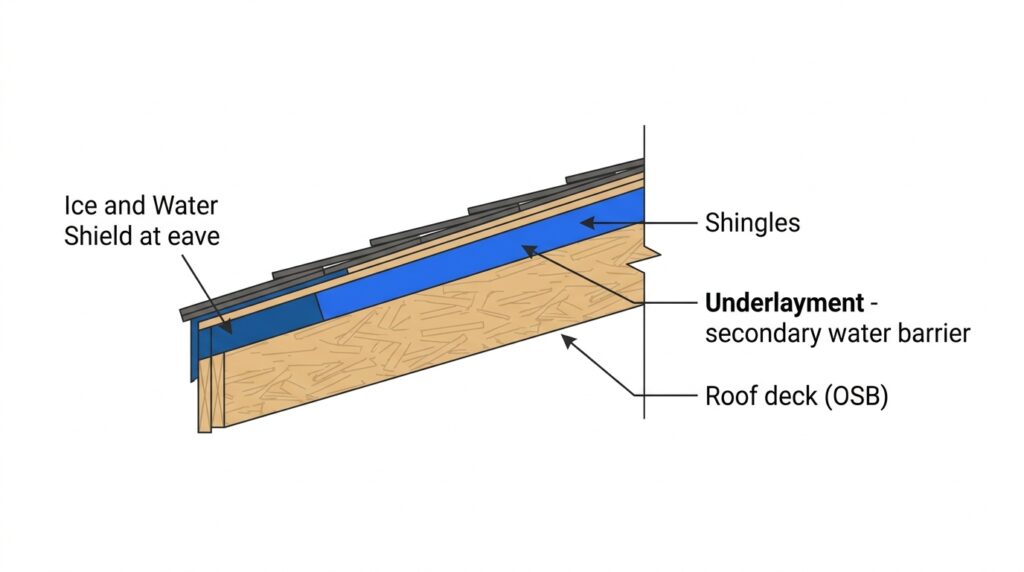
Roofing underlayment is a water-resistant or waterproof material installed directly on your roof deck, beneath shingles or other roofing materials. It acts as a secondary barrier against rain, ice, and condensation – protecting your roof deck if shingles are damaged or water backs up under the edges. Yes, you need it – underlayment is required by virtually all shingle manufacturers to maintain warranty coverage, and by most local building codes. Use our Roofing Material Calculator to estimate how many rolls you need for your roof.
What Is Roofing Underlayment Used For?
Roofing underlayment serves three primary functions:
1. Secondary water barrier – Shingles are your roof’s primary weather shield, but they are not perfectly watertight. Water can penetrate at nail holes, damaged shingles, wind-driven rain, or at roof edges. Underlayment catches water that gets past the shingles and directs it off the roof before it reaches the wood deck.
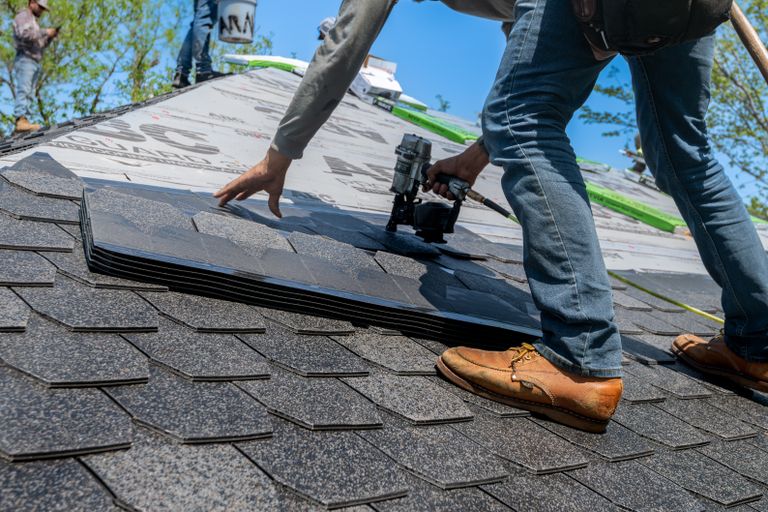
2. Protection during installation – A roof replacement can take 1-3 days. Underlayment protects the exposed deck from rain during the installation process before shingles go down.
3. Fire resistance – Some underlayment products contribute to a roof system’s fire rating. Many local building codes require specific fire-rated assemblies, and the underlayment is part of meeting that rating.
Three Types of Roofing Underlayment
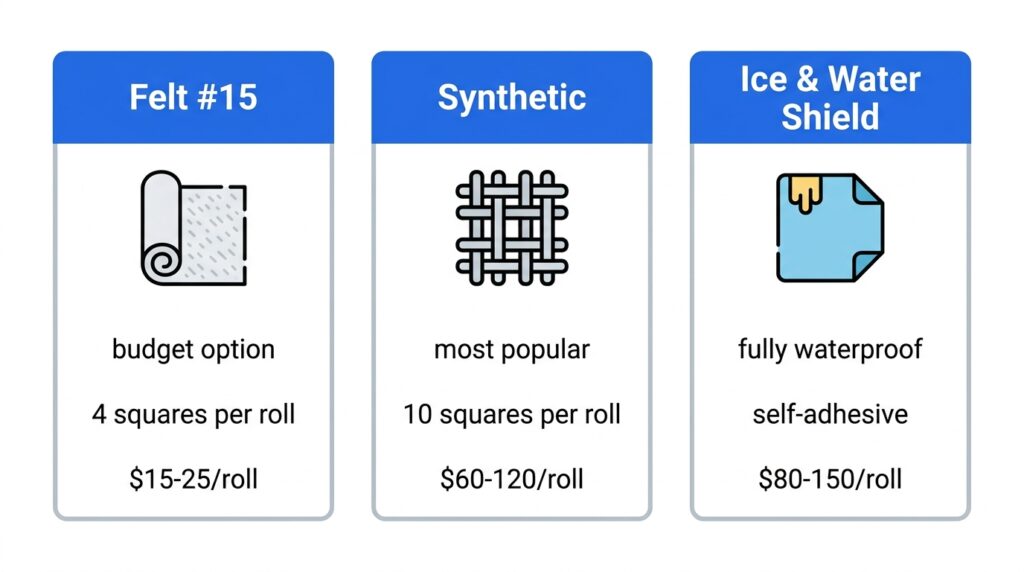
There are three main types of roofing underlayment, each with different performance characteristics and costs:
| Type | Material | Coverage per Roll | Cost per Roll | Best For |
|---|---|---|---|---|
| Felt #15 (tar paper) | Asphalt-saturated felt | ~4 squares | $15-$25 | Budget projects, mild climates |
| Felt #30 (tar paper) | Heavier asphalt-saturated felt | ~2 squares | $25-$40 | Standard residential roofs |
| Synthetic underlayment | Polypropylene or polyester | ~10 squares | $60-$120 | Most modern installations |
| Ice and water shield | Self-adhering rubberized asphalt | ~2 squares | $80-$150 | Eaves, valleys, cold climates |
Felt underlayment (#15 and #30) is made from organic or fiberglass mat saturated with asphalt. It is the traditional “tar paper” that roofing contractors have used for decades. Felt #15 is thinner and covers more area per roll, while Felt #30 is heavier and more durable. Both are inexpensive but can tear in wind and absorb moisture if left exposed.
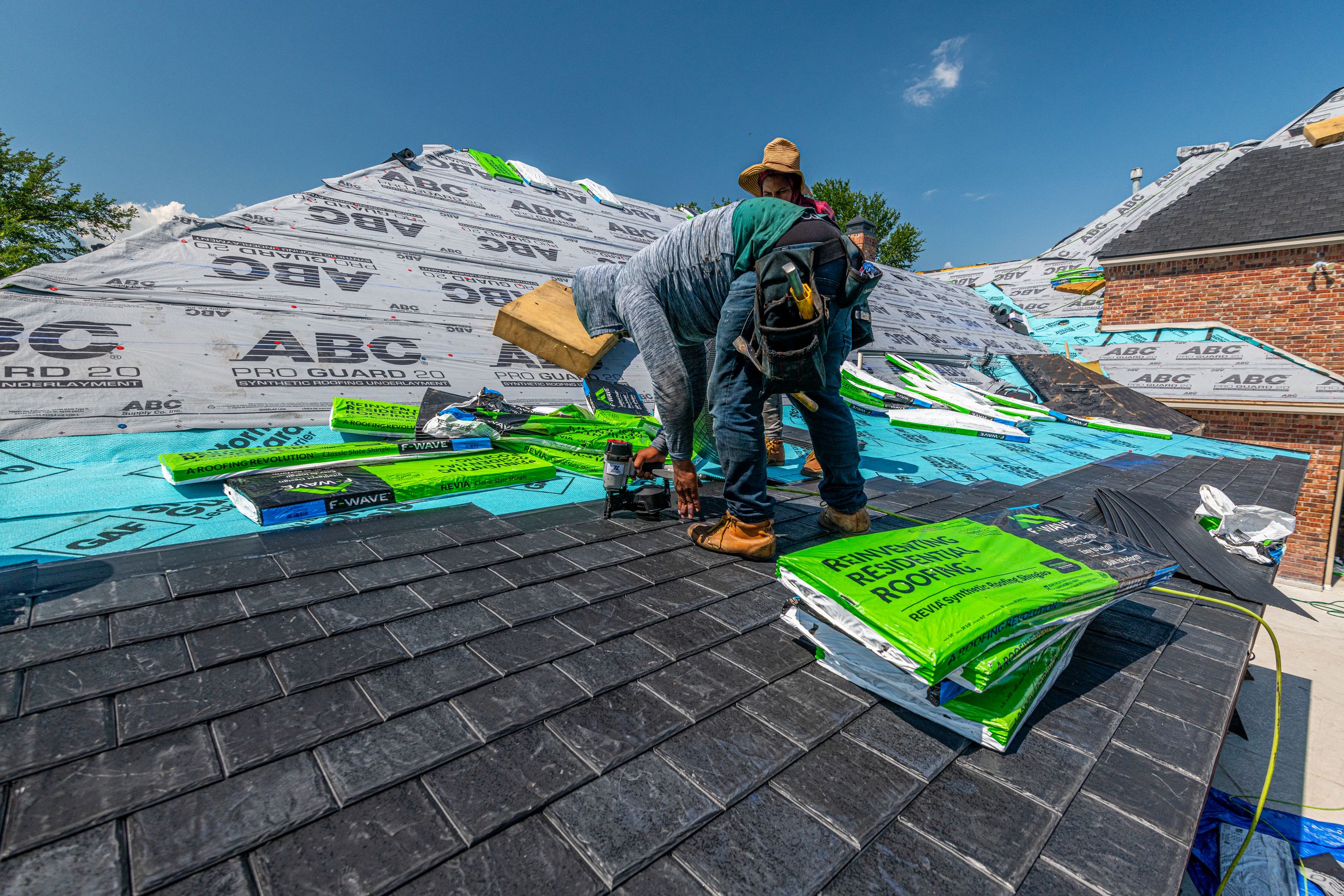
Synthetic underlayment is made from woven or spun polypropylene or polyester. It is significantly lighter, stronger, and more tear-resistant than felt. Synthetic underlayment covers 10+ squares per roll (vs 2-4 for felt), making installation faster, and it has better UV resistance if left exposed during multi-day installations. Most modern roofing contractors now use synthetic by default.
Ice and water shield is a self-adhesive rubberized asphalt membrane that bonds directly to the roof deck, creating a completely waterproof seal. Unlike felt or synthetic underlayment, which are mechanically fastened and not fully waterproof, ice and water shield seals around nail penetrations. It is required at eaves and valleys in most cold climates and is often required by code in the first 3-6 feet from the eave.
Is Underlayment Necessary for Roofing?
Yes – roofing underlayment is necessary for three reasons:
Manufacturer warranty requirements – virtually every major shingle manufacturer (GAF, Owens Corning, CertainTeed, Atlas) requires underlayment installation as a condition of their shingle warranty. Installing shingles without underlayment typically voids the warranty entirely.
Building code requirements – most US building codes require underlayment under asphalt shingles. The International Residential Code (IRC) specifically requires underlayment for asphalt shingle installations on roofs above 2/12 pitch. Local jurisdictions may have additional requirements.
Practical protection – a roof without underlayment has no secondary water barrier. Any shingle failure, wind event, or installation error goes directly to the wood deck. Deck damage from water intrusion is far more expensive to repair than the cost of underlayment ($50-$120 per roll for synthetic).
The only scenario where underlayment may be skipped is for certain metal roofing systems installed over open purlins (not solid decking), but this is uncommon in residential applications and still requires code verification.
Is Roofing Underlayment the Same as Tar Paper?
Felt underlayment is commonly called “tar paper,” but the two terms are not exactly interchangeable. Traditional tar paper was made with organic felt saturated in coal tar. Modern felt underlayment uses asphalt saturation instead of coal tar, making it technically different – though the terms are used interchangeably in the roofing industry.
Another name for roofing underlayment is “roofing felt,” “felt paper,” or “building paper.” Synthetic underlayment has no common alternative name but is sometimes called “synthetic felt” to distinguish it from traditional asphalt-saturated felt.
Which Underlayment Should You Choose?
| Roof Type / Situation | Recommended Underlayment |
|---|---|
| Standard asphalt shingle roof, warm climate | Synthetic underlayment |
| Standard asphalt shingle roof, cold climate | Synthetic + ice and water shield at eaves |
| Budget re-roof project | Felt #30 |
| Metal roofing on solid deck | Synthetic underlayment |
| Roof valleys (all climates) | Ice and water shield |
| Eaves in snow-prone regions | Ice and water shield (3-6 ft minimum) |
| Around all penetrations (vents, pipes) | Ice and water shield |
| Shed or outbuilding | Felt #15 |
For most residential roof replacements in 2026, the best approach is synthetic underlayment over the entire field of the roof, with ice and water shield at eaves, valleys, and around all penetrations. This combination provides maximum protection at a reasonable cost premium over felt-only installations.
How Much Underlayment Do You Need?
Underlayment coverage depends on your roof area and the type you choose:
- Felt #15: 1 roll per 4 squares (400 sq ft) of roof area
- Felt #30: 1 roll per 2 squares (200 sq ft) of roof area
- Synthetic: 1 roll per 10 squares (1,000 sq ft) of roof area
For a 2,000 sq ft home with approximately 22-24 squares of roof area:
- Felt #15: 6 rolls
- Felt #30: 12 rolls
- Synthetic: 3 rolls
Use our free Roofing Material Calculator to get exact roll counts based on your specific roof area with waste factor applied.
Frequently Asked Questions
Calculate Your Underlayment Quantity
Use RoofCalcHub’s free Roofing Material Calculator to calculate exactly how many rolls of underlayment you need based on your roof area and underlayment type. For a complete project cost estimate including shingles, labor, and all materials, see our Roofing Cost Calculator.