What Is a Good Roof Pitch? – Complete Guide for Every Roof Type
A good roof pitch for most residential homes is between 4/12 and 6/12 – this range provides efficient water drainage, works with standard asphalt shingles, and remains safe for contractors to walk during installation and maintenance. The ideal pitch varies depending on your climate, roofing material, and structure type. Use our free Roof Pitch Calculator to find your current pitch or convert between pitch formats.
What Is the Golden Rule for Roof Pitch?
The golden rule for residential roof pitch is a minimum of 2/12 for any roof using standard asphalt shingles, with 4/12 to 6/12 considered the optimal range for most US climates. This range balances four key factors: water drainage efficiency, material compatibility, structural load, and contractor walkability during installation and repair.
The International Residential Code (IRC) sets 2/12 as the absolute minimum slope for asphalt shingles under standard installation. Below 2/12, water pools rather than drains, creating leak risk regardless of material quality. Above 12/12 (45 degrees), installation becomes significantly more dangerous and expensive, requiring specialized equipment and safety systems.
Good Roof Pitch by Structure Type
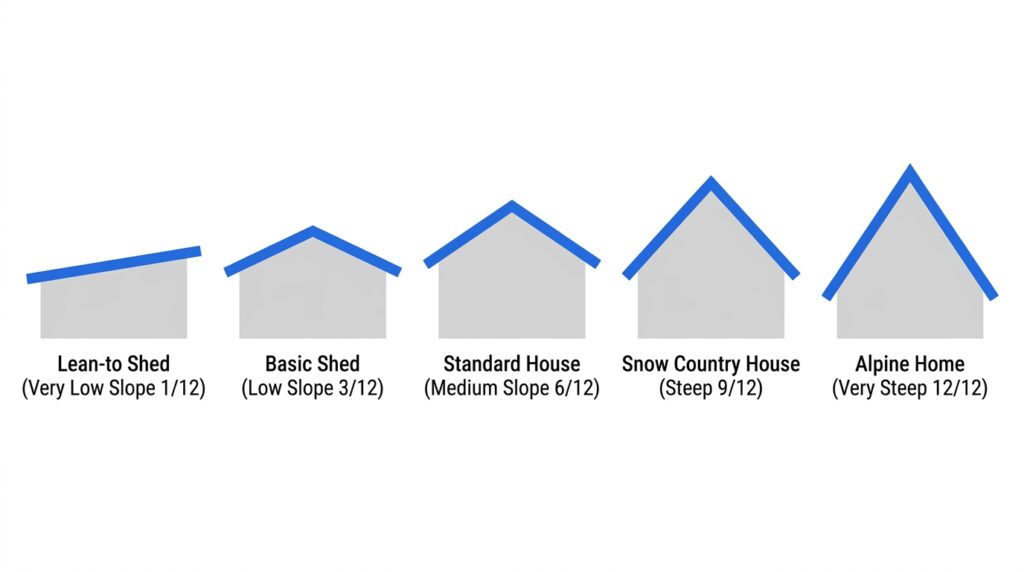
Different structures have different optimal pitch ranges based on their purpose, size, and drainage requirements:
| Structure Type | Recommended Pitch | Reason |
| Standard house (all climates) | 4/12 to 6/12 | Best balance of drainage, cost, and material options |
| House in snow country | 6/12 to 12/12 | Steeper pitch sheds snow load before it accumulates |
| House in high wind zone | 4/12 to 6/12 | Lower profiles reduce wind uplift risk |
| Shed (basic storage) | 3/12 to 4/12 | Low cost, simple construction, adequate drainage |
| Lean-to shed | 1/12 to 3/12 | Minimal pitch needed, keep water away from wall |
| Garage | 4/12 to 6/12 | Matches house aesthetic, good drainage |
| Chicken coop | 3/12 to 4/12 | Simple construction, weather protection |
| Pergola / covered patio | 1/12 to 3/12 | Minimal pitch for drainage, open-air structure |
| Commercial flat roof | 1/4/12 to 1/2/12 | Membrane systems handle near-flat slopes |
Good Roof Pitch for Snow
In snow-prone regions, a steeper roof pitch is essential for preventing dangerous snow accumulation and ice dams. A minimum of 6/12 is recommended for areas that regularly receive heavy snowfall, with 8/12 to 12/12 common in high-alpine regions and the upper Midwest.
Snow load on a flat or low-slope roof can reach 20-40 lbs per square foot in heavy snowfall events. At these loads, residential roof structures can fail if not specifically engineered for the weight. A steeper pitch allows snow to slide off naturally before it accumulates to dangerous levels.
For context:
- 4/12 pitch (18.4 degrees) – adequate for light snow areas (under 20 inches annual snowfall)
- 6/12 pitch (26.6 degrees) – recommended for moderate snow (20-60 inches annually)
- 8/12 to 12/12 pitch (33-45 degrees) – recommended for heavy snow regions (60+ inches annually)
States like Minnesota, Wisconsin, Michigan, and upstate New York typically see homes built with 8/12 to 12/12 pitches for this reason. Southern states rarely exceed 4/12 to 6/12 since snow load is not a design factor.
Most Common Roof Pitches in the US
The most common roof pitch for US residential homes is 6/12, followed closely by 4/12 and 5/12. Here is how each common pitch is used:
| Pitch | Angle | Common Use | Walkable? |
| 2/12 | 9.5° | Minimum slope, flat-roof adjacent | Yes |
| 3/12 | 14.0° | Low-slope, modern architecture | Yes |
| 4/12 | 18.4° | Ranch homes, warm climates | Yes |
| 5/12 | 22.6° | Common suburban homes | Yes |
| 6/12 | 26.6° | Most common US residential pitch | Yes (with care) |
| 7/12 | 30.3° | Traditional homes, cold climates | Requires staging |
| 8/12 | 33.7° | Cape Cod style, high snow areas | Requires staging |
| 10/12 | 39.8° | Steep traditional, alpine homes | Difficult |
| 12/12 | 45.0° | Very steep, specialty homes | Dangerous |
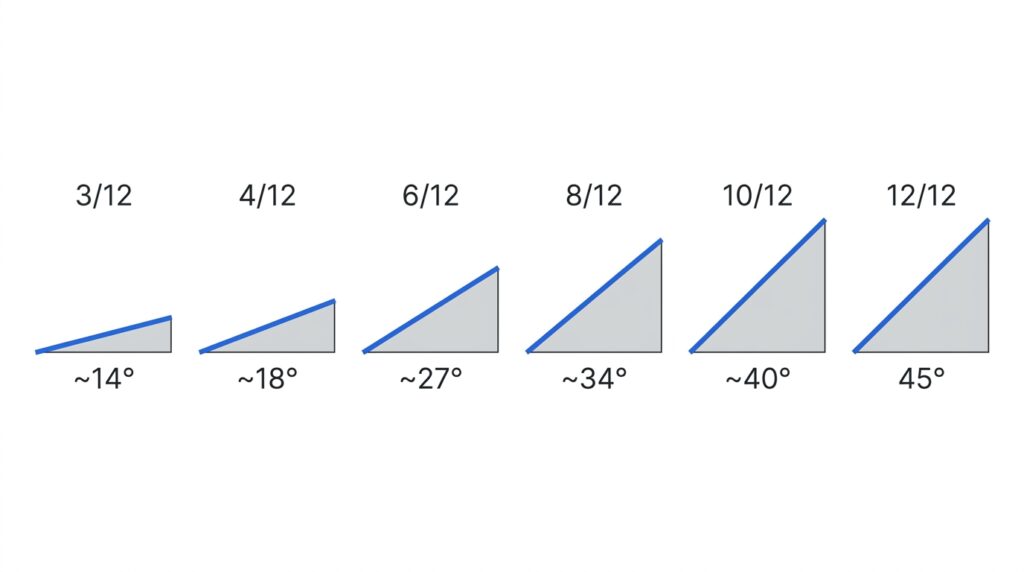
A 5/12 roof pitch is extremely common – it sits comfortably between the very common 4/12 and 6/12 and is considered neither flat nor steep. It is walkable for most contractors without staging equipment and sheds rain and moderate snow effectively.
What Is the Most Attractive Roof Pitch?
The most visually attractive roof pitch depends on the home’s architectural style, but 6/12 to 9/12 pitches are generally considered the most aesthetically pleasing for traditional residential homes. This range creates a clearly defined, proportional roofline that gives a home a classic appearance without looking either overly flat or excessively steep.
Contemporary and modern architecture intentionally uses lower pitches (1/12 to 3/12) as a design statement – the flat or near-flat roof is a deliberate aesthetic choice, not a limitation. Traditional, craftsman, colonial, and Victorian styles tend to use steeper pitches (8/12 to 12/12) that create dramatic, prominent rooflines.
For most suburban homes aiming for maximum curb appeal within a budget, 6/12 is the sweet spot – steep enough to look substantial, not so steep that it becomes the dominant visual element of the home.
Minimum Roof Pitch by Roofing Material
Different roofing materials have different minimum slope requirements. Using a material below its minimum pitch causes water to back up under the material, leading to leaks and premature failure:
| Roofing Material | Minimum Pitch | Notes |
| Asphalt shingles (standard) | 2/12 | Requires double underlayment below 4/12 |
| Metal roofing (standing seam) | 1/4/12 | Can handle near-flat slopes |
| Wood shingles | 3/12 | Requires good ventilation |
| Clay/concrete tile | 2.5/12 | Heavy – verify structural capacity |
| Slate | 4/12 | Very heavy, requires professional installation |
| EPDM membrane | 1/4/12 | Designed for flat/low-slope roofs |
| Built-up roofing (BUR) | 1/4/12 | Commercial flat roof standard |
If you are planning to install asphalt shingles on a roof below 4/12, most manufacturers require modified installation procedures including additional underlayment layers to maintain warranty coverage.
Frequently Asked Questions
Find Your Roof Pitch
Not sure what pitch your roof is? Use RoofCalcHub’s free Roof Pitch Calculator to find your pitch from rise and run measurements taken in your attic, or convert a known angle to a pitch ratio. Once you know your pitch, use our Shingle Calculator to get an accurate material estimate that accounts for your specific slope.