
Aluminum vs Vinyl Gutters – Which Is Right for Your Home?
Aluminum gutters cost $8-$15 per linear foot installed and last 20-30 years. Vinyl gutters cost $5-$12 per linear foot and last 10-20 years. Aluminum is the better long-term choice for most US climates, while vinyl works well in mild regions where budget is the primary concern. Use our free Gutter Calculator to estimate how much gutter you need, then use the comparison below to choose the right material.
Aluminum vs Vinyl Gutters – Quick Comparison
| Feature | Aluminum Gutters | Vinyl Gutters |
|---|---|---|
| Material cost (per ft) | $2-$5 | $1-$3 |
| Installed cost (per ft) | $8-$15 | $5-$12 |
| Lifespan | 20-30 years | 10-20 years |
| Weight | Lightweight | Very lightweight |
| DIY friendly | Moderate | Easy (snap-together) |
| Cold weather | Excellent | Poor (brittle, cracks) |
| Hot/UV exposure | Good | Fair (warps, fades) |
| Color options | Wide range, paintable | Limited, fades over time |
| Seamless available | Yes | Rarely |
| Rust resistant | Yes (aluminum doesn’t rust) | Yes (plastic) |
| Maintenance | Low | Low-moderate |
| Recyclable | Yes | No |
Cost Difference – Aluminum vs Vinyl
For a typical home needing 150-200 linear feet of gutters:
| Home Size | Vinyl Installed | Aluminum Installed | Difference |
|---|---|---|---|
| 150 ft run | $750-$1,800 | $1,200-$2,250 | $450-$600 more for aluminum |
| 200 ft run | $1,000-$2,400 | $1,600-$3,000 | $600-$800 more for aluminum |
| 250 ft run | $1,250-$3,000 | $2,000-$3,750 | $750-$1,000 more for aluminum |
The upfront cost difference of $600-$1,000 for a typical home is meaningful but worth examining over a full lifecycle. Vinyl gutters lasting 15 years vs aluminum lasting 25 years means one additional vinyl replacement over a 30-year period – adding another $1,000-$2,400 in replacement costs. Over time, aluminum is often cheaper in total cost of ownership despite the higher upfront price.
Which Is Better for Your Climate?
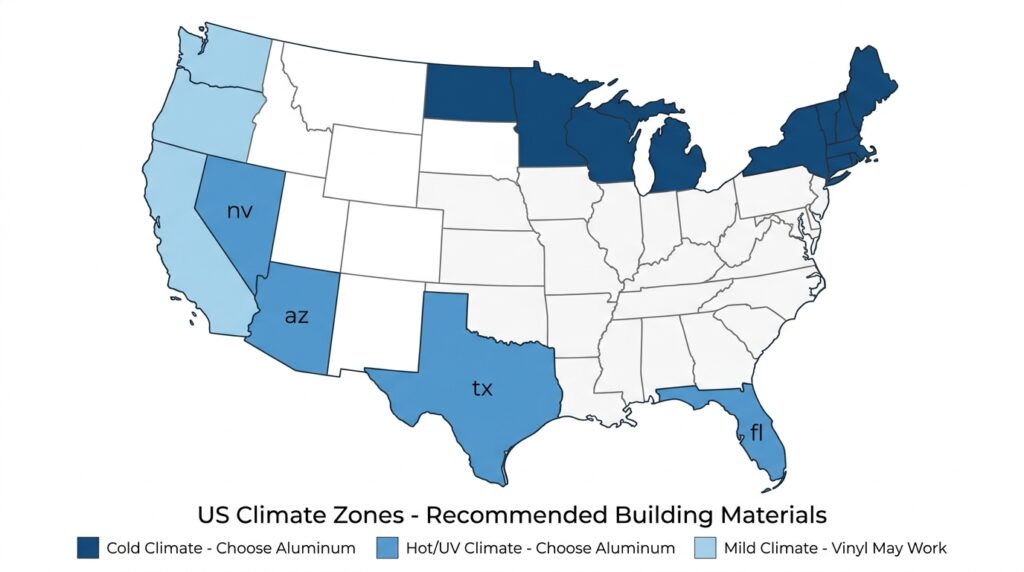
Climate is the most important factor in choosing between aluminum and vinyl gutters – more important than upfront cost for most homeowners.
Choose aluminum if you live in:
- Cold climate states (Minnesota, Wisconsin, Michigan, New York, New England) – vinyl becomes brittle and cracks in freezing temperatures, especially where gutters fill with ice and snow repeatedly
- Hot, sunny climates (Arizona, Nevada, Florida, Texas) – prolonged UV exposure causes vinyl to fade, warp, and become brittle within 5-10 years
- Areas with frequent severe weather or hail – aluminum withstands impact better than vinyl
Vinyl may work well if you live in:
- Mild, temperate climates (Pacific Northwest, coastal California, parts of the Southeast) where temperature extremes are rare
- Areas where the home will be sold within 10 years and budget is the priority
- Rental properties where lowest upfront cost outweighs long-term durability
Florida specifically: Despite the warm climate, Florida’s intense UV exposure, hurricane-force wind events, and heavy rainfall make aluminum the better long-term choice. Vinyl’s UV degradation accelerates significantly in Florida’s sun, and vinyl gutters are more vulnerable to wind damage than aluminum.
Durability – Which Lasts Longer?
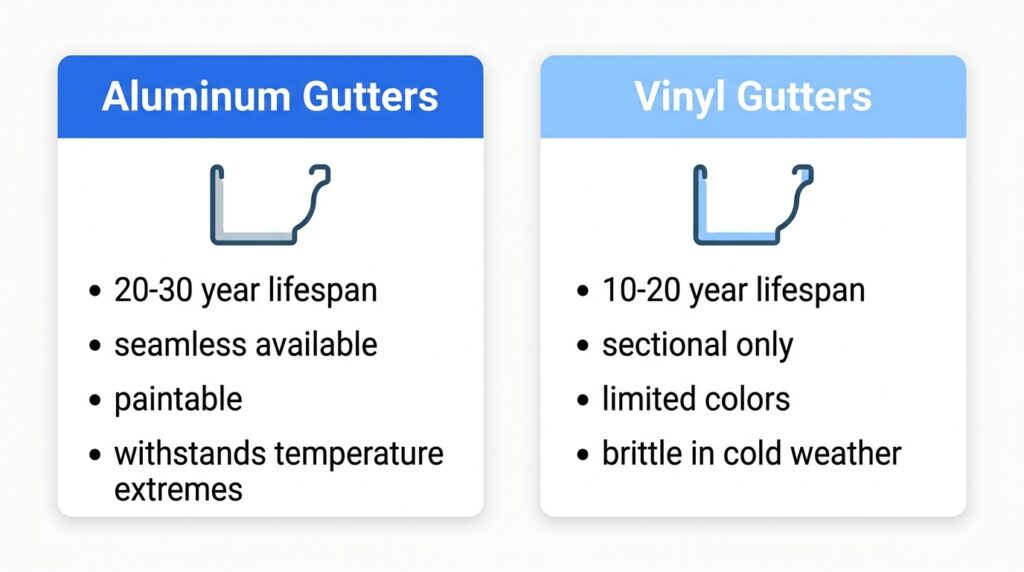
Aluminum gutters last 20-30 years under normal conditions. They do not rust (aluminum naturally oxidizes to form a protective layer), resist most weather conditions, and can be painted to match trim colors. Dents from hail or ladders are the primary damage risk.
Vinyl gutters last 10-20 years, with shorter lifespans at the lower end in climates with temperature extremes. The two primary failure modes are cracking in cold weather (vinyl becomes brittle below 32°F and especially vulnerable below 20°F) and sagging or warping in heat (vinyl softens under prolonged UV exposure and direct sun).
One meaningful durability advantage for aluminum: seamless aluminum gutters are available and common. Seamless gutters are fabricated on-site in one continuous piece, eliminating the joints where most gutter leaks originate. Vinyl gutters are almost always sectional (pre-cut in 10-foot pieces with snap-together joints), meaning more joint points and more potential leak locations.
DIY Installation – Which Is Easier?
Vinyl gutters are easier to DIY than aluminum. Vinyl sections snap together without special tools, are very lightweight, and are available at every Home Depot and Lowe’s. A confident DIYer can install vinyl gutters on a single-story home in a day.
Aluminum sectional gutters are also DIY-installable but require cutting with tin snips and using rivets or gutter screws rather than snap connections. Seamless aluminum gutters cannot be DIY-installed as they require a specialized fabrication machine.
DIY material cost comparison for 150 linear feet:
- Vinyl sectional: $150-$450 in materials
- Aluminum sectional: $300-$750 in materials
- Seamless aluminum: not DIY-possible, requires professional
If you plan to DIY and budget is tight, vinyl is the practical choice. If you want seamless gutters (the better long-term option), professional aluminum installation is required.
Which Should You Choose?
Choose aluminum gutters if:
- You plan to stay in the home 15+ years
- You live in a climate with cold winters or intense summer heat
- You want seamless gutters for fewer leak points
- Curb appeal and color-matching matter to you (aluminum is paintable)
- You want a recyclable, more environmentally responsible option
Choose vinyl gutters if:
- Budget is the primary constraint
- You live in a mild, temperate climate
- You plan to sell the home within 10 years
- You want the easiest possible DIY installation
- The property is a rental where lowest upfront cost is the priority
For most US homeowners, aluminum is the better choice – the $600-$1,000 upfront premium over vinyl is recovered in longer lifespan and avoided replacement costs within 15-20 years.
Frequently Asked Questions
Calculate Your Gutter Cost
Use RoofCalcHub’s free Gutter Calculator to estimate how many linear feet your home needs and get a material cost estimate for both aluminum and vinyl. For your complete exterior project budget, also see our Roofing Cost Calculator.