3-Tab vs Architectural Shingles – Cost, Durability & Which to Choose
Architectural shingles cost $35-$50 per bundle installed versus $25-$35 for 3-tab shingles – roughly 40-50% more upfront. But architectural shingles last 25-30 years longer, carry better wind ratings, and look significantly better on most homes. This guide compares both types across cost, durability, appearance, and value so you can make the right choice for your roof. Use our free Shingle Calculator to estimate material costs for either option.
3-Tab vs Architectural Shingles – Quick Comparison
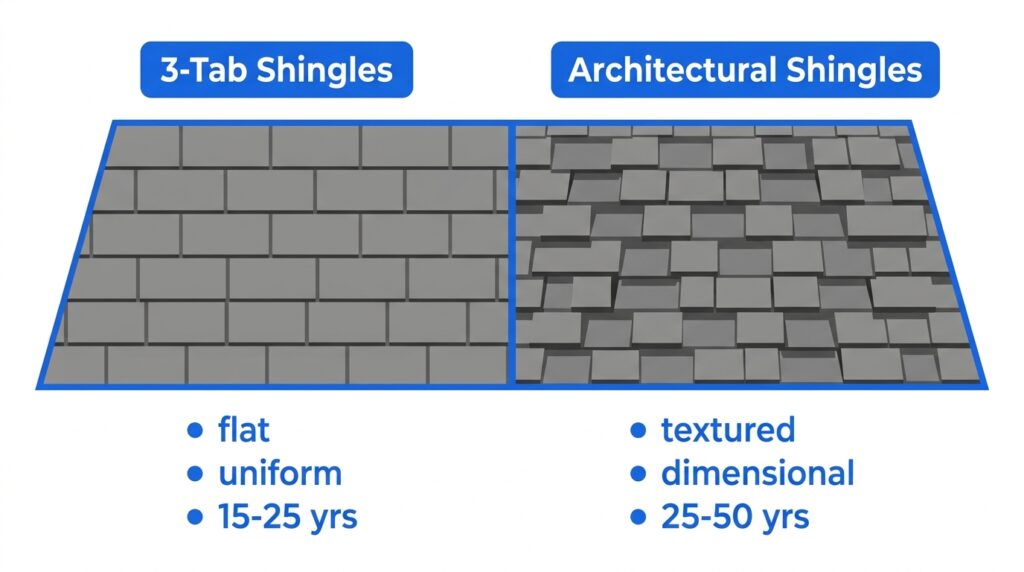
3-tab shingles are flat, single-layer asphalt shingles with three uniform cutouts (tabs) along the bottom edge. They have been the standard roofing material in the US for decades but are increasingly being phased out in favor of architectural shingles.
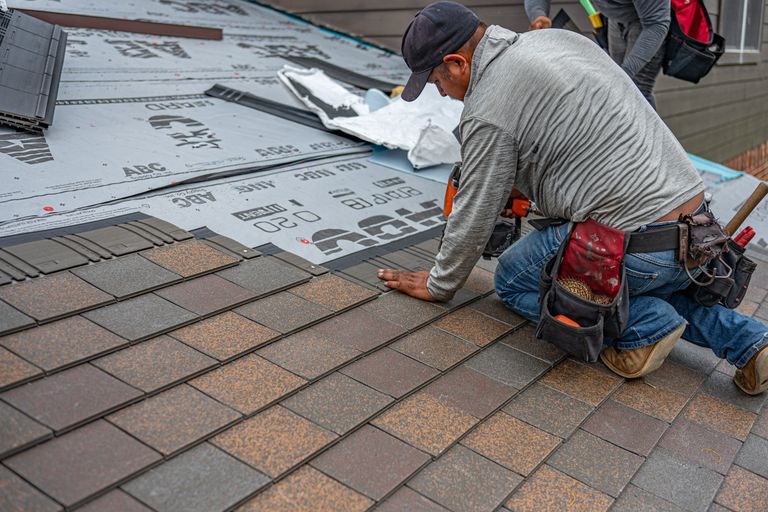
Architectural shingles (also called dimensional or laminate shingles) are multi-layer shingles bonded together to create a thicker, textured appearance that mimics the look of wood shake or slate. They are currently the most popular residential roofing material in the US, found on approximately 70% of new roofs installed.
| Feature | 3-Tab Shingles | Architectural Shingles |
| Layers | Single layer | Two or more layers laminated |
| Thickness | Thin (~1/8 inch) | Thick (~3/16 inch) |
| Weight | 200-250 lbs per square | 250-400 lbs per square |
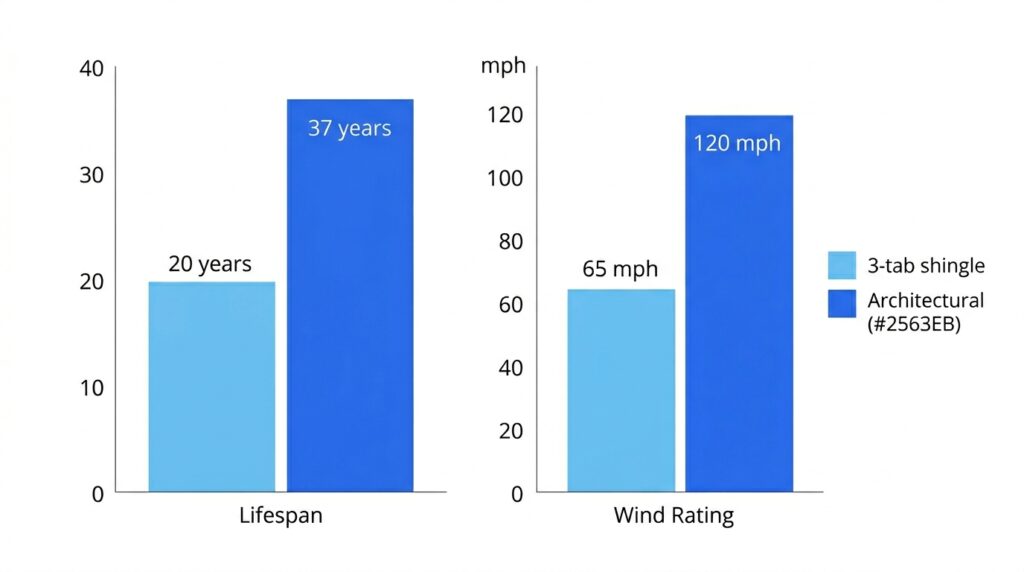
| Lifespan | 15-25 years | 25-50 years |
| Wind rating | 60-70 mph | 110-130 mph |
| Cost per bundle | $25-$35 | $35-$50 |
| Cost per square installed | $100-$150 | $150-$250 |
| Appearance | Flat, uniform | Dimensional, textured |
| Warranty | 20-25 years | 30-50 years |
| Available colors | Limited | Wide range |
Cost Difference Between 3-Tab and Architectural Shingles
For a typical 2,000 sq ft home needing approximately 22-24 squares of shingles, here is the total cost difference:
| Shingle Type | Material Cost | Installed Cost | Total Difference |
| 3-Tab | $2,200-$3,600 | $5,000-$8,000 | Baseline |
| Architectural | $3,300-$5,000 | $7,500-$12,000 | $2,500-$4,000 more |
The upfront cost difference of $2,500-$4,000 for a typical home is meaningful but needs to be weighed against lifespan. A 3-tab roof lasting 20 years costs the same as two 3-tab roofs over 40 years – which is roughly equivalent to one architectural roof lasting the same period. Over a 40-year horizon, architectural shingles often cost the same or less in total.
Durability – Which Lasts Longer?
Architectural shingles last significantly longer than 3-tab shingles in almost every climate condition. The multi-layer laminated construction resists impact, wind uplift, and UV degradation far better than single-layer 3-tab shingles.
Wind resistance is the most critical durability difference. Standard 3-tab shingles are rated for 60-70 mph winds, while most architectural shingles carry a 110-130 mph wind rating. In hurricane-prone states like Florida, Texas, and Louisiana, building codes in many counties now require wind ratings that 3-tab shingles cannot meet – making architectural shingles effectively mandatory in those areas.
UV and heat resistance is also stronger in architectural shingles due to their thicker asphalt layer and heavier granule coating. In hot, sun-intense climates like Arizona, Nevada, and Southern California, 3-tab shingles can begin showing granule loss and cracking within 10-12 years, while architectural shingles in the same climate hold up significantly longer.
Are 3-Tab Shingles Being Discontinued?
Yes – 3-tab shingles are effectively being phased out of the US market. Several major manufacturers including GAF and Owens Corning have significantly reduced their 3-tab product lines, and some contractors report difficulty sourcing certain 3-tab colors and profiles in their regions.
The reasons are straightforward: architectural shingles now cost nearly the same to manufacture as 3-tab shingles at scale, the performance gap is significant, and consumer demand has shifted overwhelmingly toward architectural shingles. Most roofing contractors now recommend against 3-tab shingles even when budget is the primary concern, because the shorter lifespan and lower wind resistance create greater long-term risk and cost.
If you are replacing a roof today, specifying 3-tab shingles may limit your color choices and create future difficulty matching replacements for repairs. Architectural shingles are the safer long-term choice even when the budget difference is tight.
Appearance – Which Looks Better?
Architectural shingles look significantly better than 3-tab shingles on most homes. The layered construction creates shadow lines and depth that give a roof texture and visual interest, closely resembling wood shake or slate at a fraction of the cost. From street level, a home with architectural shingles looks noticeably more premium than one with flat, uniform 3-tab shingles.
For homes where curb appeal and resale value matter, architectural shingles are the clear winner. For rental properties or utility buildings where appearance is not a priority, 3-tab shingles still function adequately.
Which Should You Choose?
Choose 3-tab shingles if:
- Budget is extremely tight and the home will be sold within 10 years
- The structure is a shed, outbuilding, or low-value utility building
- You are making a temporary repair and plan a full replacement soon
- Local material availability makes 3-tab the only practical option
Choose architectural shingles if:
- You plan to stay in the home for 15+ years
- You live in a region with high winds, hail, or extreme temperatures
- Curb appeal and resale value are priorities
- You want the longest possible time before the next re-roof
For almost every homeowner replacing a residential roof in 2026, architectural shingles are the better choice. The cost difference has narrowed considerably, the performance gap has widened, and the market is clearly moving away from 3-tab as a standard option.
Frequently Asked Questions
Estimate Your Shingle Cost
Whether you choose 3-tab or architectural shingles, use RoofCalcHub’s free Shingle Calculator to estimate exact bundle counts and material costs based on your roof size and pitch. For a full project cost including labor, see our Roofing Cost Calculator.